
Rarity lets art and collectible stores run auctions, take offers and release limited drops on their rare products. It was built after Picture It for the same customers, with flexible pricing, scarcity and demand built in.

Same merchants, a second job to do
Picture It helped art sellers turn more shoppers into buyers, but I kept noticing a gap when merchants sold their original, rare products. My hypothesis was that while previewing a piece made for a great experience, expensive work was still hard to sell. So I built Rarity to give stores flexible pricing, scarcity and demand.
- Flexible pricingOriginals and one-of-ones are hard to sell at a single fixed price.
- A reason to buy nowWithout a deadline or a limited count, buyers of expensive pieces wait, and often leave.
- Visible demandBuyers feel more sure when they can see that others want the same piece.
- Start with our own customersPicture It stores were the first to install Rarity and the first to give feedback.
- Three ways to sellAuctions, offers and drops each give a store a different way to price a rare piece.
- Built fast with AIA new codebase and AI tools let a small team ship all three in months, not years.
Let the market set the price
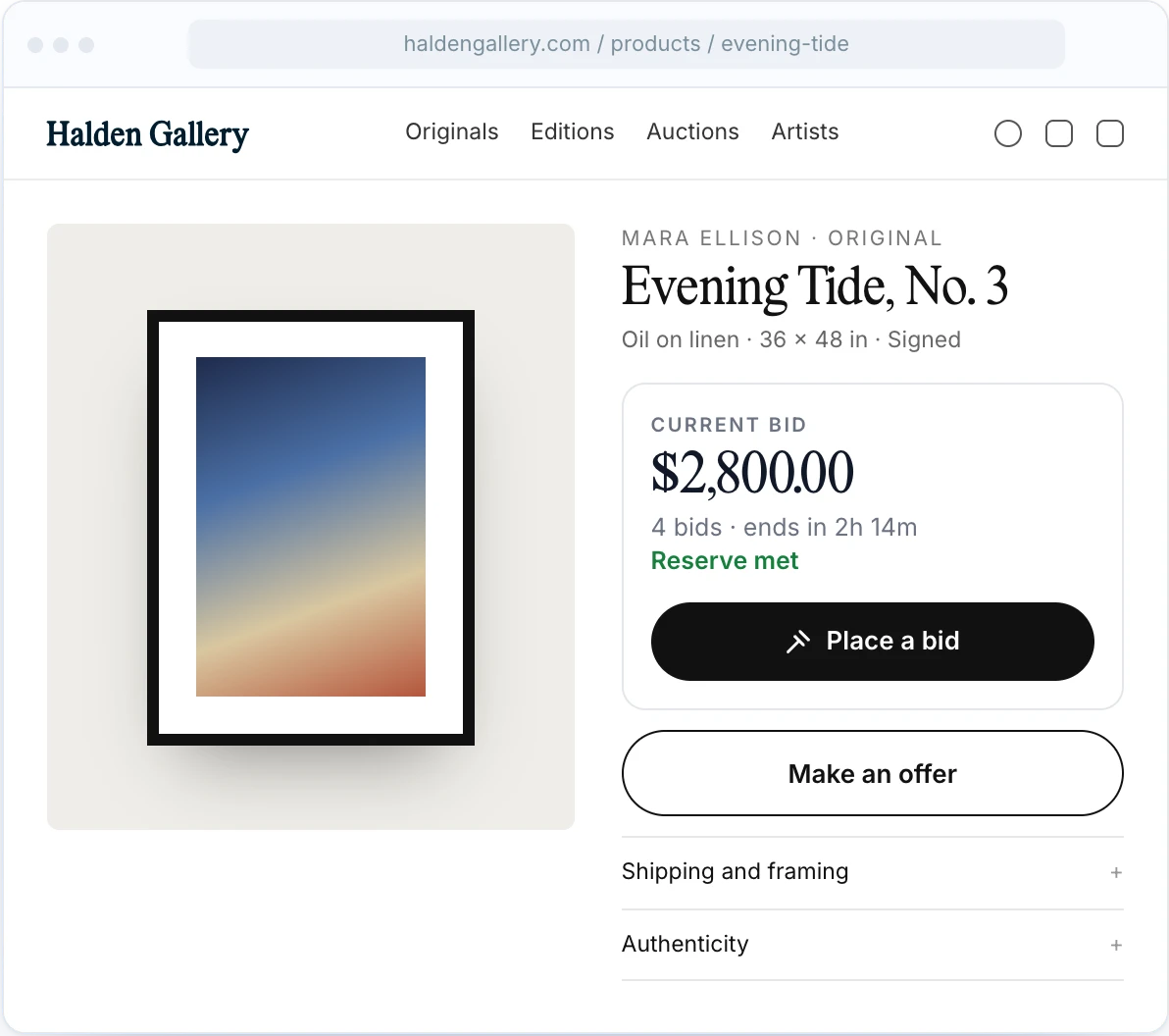
A complete suite of tools to run auctions, with reserves, max bids and bid history, plus VIP features like early access that build customer loyalty.
Let buyers name a price
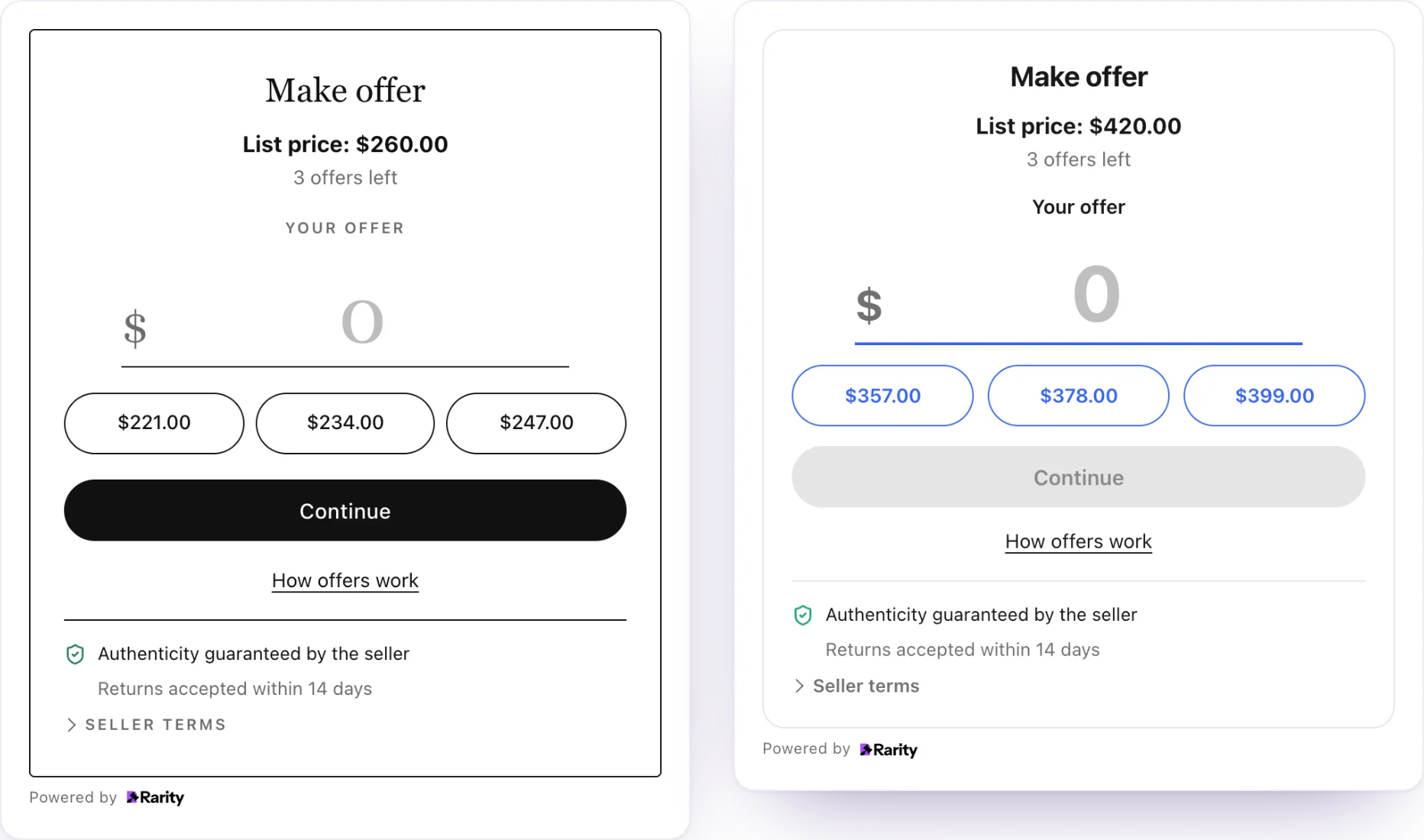
Make an offer gives stores pricing flexibility: a buyer proposes a number from the preset discounts or their own, and the seller accepts, counters or declines.
Build demand with scarcity
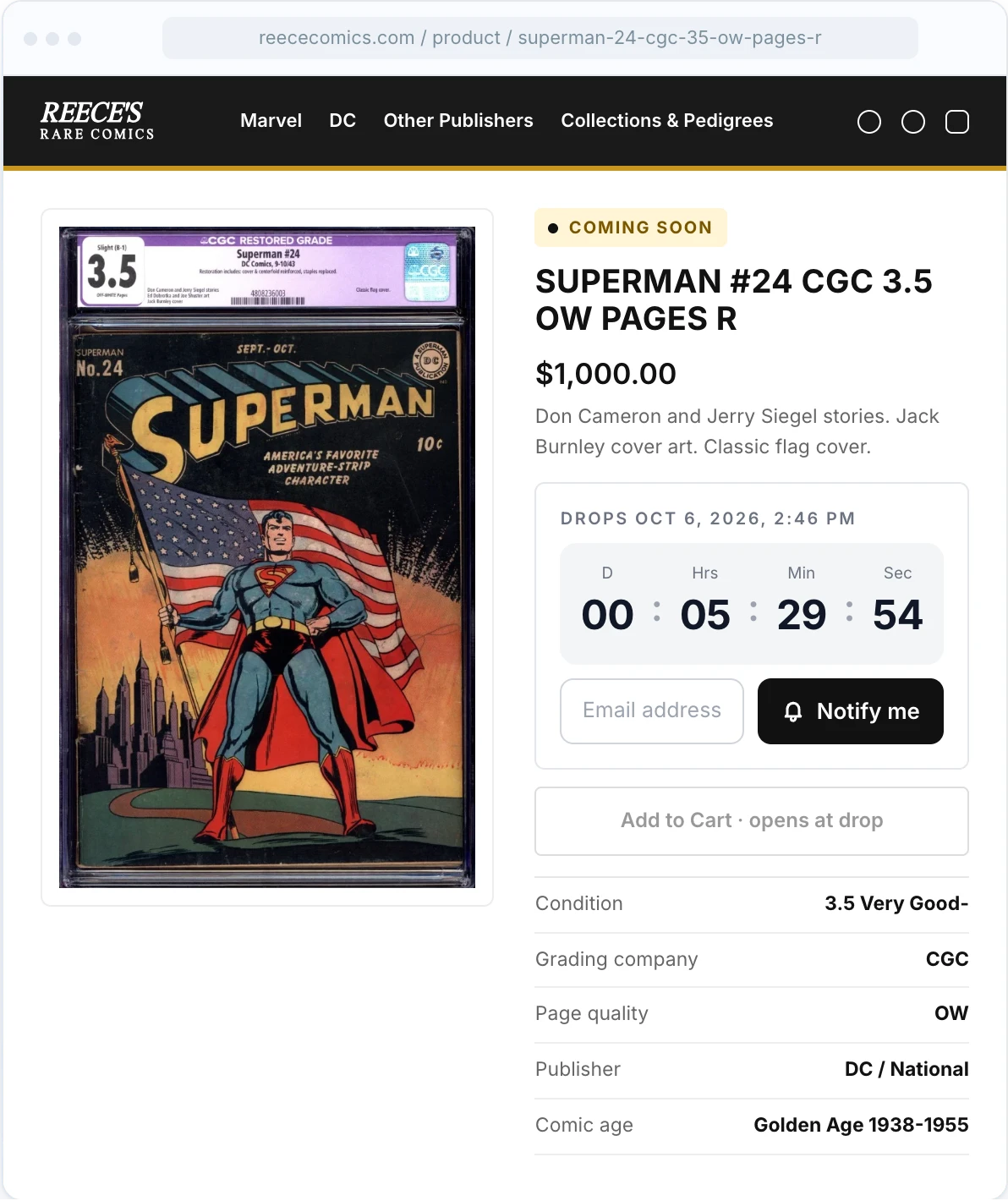
A drop with a countdown and a notify list lets a store build its email list while it builds demand for a limited product.
Auctions, offers and drops on any theme
Every merchant has their own style, so Rarity offers deep customization of themes, colors, type and corners to give their shoppers a cohesive brand experience.